Panch Kedar Yatra Teaches Beyond the Temples



There are pilgrimages you complete with your feet.
And then there are pilgrimages that continue walking inside you long after you return.
The Panch Kedar Yatra is one of them.
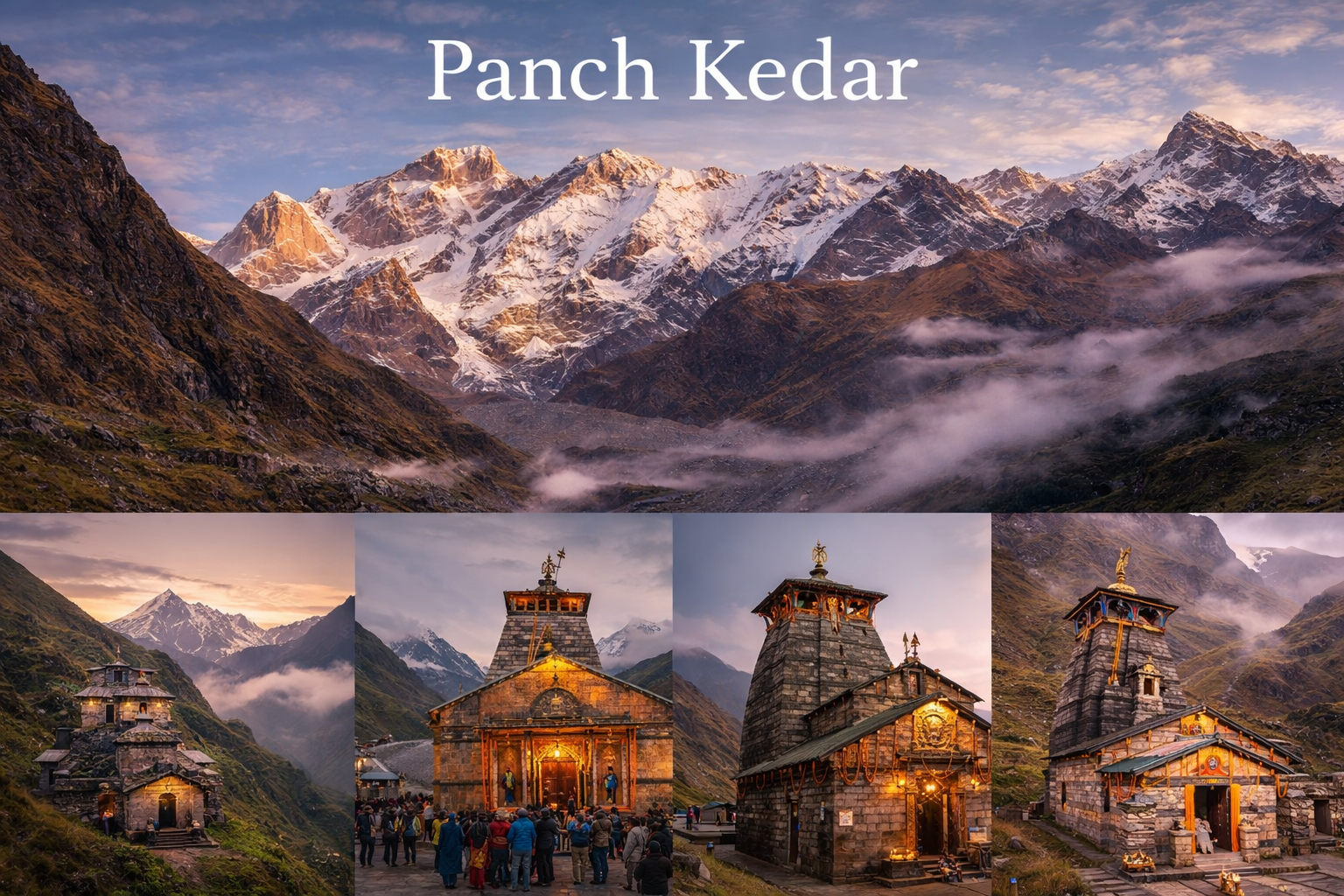
At first glance, it looks like a circuit of five sacred Shiva temples hidden in the Himalayas. But those who have walked this path know something deeper: Panch Kedar is not only about reaching Kedarnath, Tungnath, Rudranath, Madhyamaheshwar, and Kalpeshwar. It is about what Lord Shiva quietly teaches through the effort, silence, surrender, and stillness of the journey itself.
This is why people who complete Panch Kedar rarely talk only about the temples.
They talk about what changed within them.
The spiritual foundation of Panch Kedar begins after the Mahabharata war, when the Pandavas sought forgiveness from Lord Shiva for the karma of war. According to the enduring Himalayan legend, Shiva did not wish to meet them easily and took the form of a bull. When he disappeared into the earth, different parts of his form manifested across five locations in the Garhwal Himalayas, which became the Panch Kedar shrines. This legend remains the central spiritual narrative behind the yatra.
Each temple represents a different aspect of Shiva:
And that itself is the first lesson:
Sometimes the divine reveals itself only after the ego has been broken open by the path.
The Panch Kedar Yatra is not just one lesson.
It is five different teachings, unfolding across five different landscapes.
Kedarnath is where most people first encounter the true force of this yatra.
The altitude, the cold, the effort, the weather, the silence, the temple standing against the mountain… everything here strips away the illusion that life can always be controlled.
And that is Kedarnath’s teaching:
Shiva at Kedarnath does not arrive softly. He arrives like a truth you can no longer avoid.
Many yatris begin here with plans.
Most leave with humility.
Tungnath, the highest Shiva temple in the world, is reached through a shorter but deeply beautiful climb from Chopta.
Unlike the intensity of Kedarnath, Tungnath carries a gentler silence. It feels less like a challenge and more like an invitation.
Its teaching is simple:
Tungnath reminds you that not every sacred experience has to be dramatic. Some truths reveal themselves in stillness, cloud, wind, and the sound of your own breath.
If one temple in Panch Kedar feels like a mirror, it is Rudranath.
Remote, demanding, and deeply atmospheric, Rudranath is where Shiva is worshipped in the form of the face. It is also often considered one of the most emotionally intense parts of the circuit.
And its lesson is powerful:
Rudranath is not only physically remote.
It is inwardly remote.
It asks you to keep walking even when the path feels uncertain.
And that is often how inner transformation works too.
Madhyamaheshwar, associated with Shiva’s navel, feels deeply connected to stillness, center, and grounding.
The journey here is scenic, open, and meditative. It teaches something modern life constantly steals from us:
Not productivity.
Not constant movement.
Not urgency.
Just balance.
In many ways, Madhyamaheshwar teaches you how to return to your center after life has scattered you in too many directions.
Kalpeshwar is the quietest reminder of all.
Unlike the high, dramatic climbs of the other Kedars, Kalpeshwar is more accessible and remains open throughout the year, making it the most intimate of the five.
And that is exactly its teaching:
Kalpeshwar reminds you that spirituality is not only found in epic effort. It is also found in closeness, humility, and attention.
Even for those who come with devotion, Panch Kedar often teaches lessons that go beyond ritual.
It teaches:
And perhaps most importantly:
That is why Panch Kedar stays with people so deeply.
Because it does not just show you temples.
It shows you your own edges… and then gently asks you to soften them.
A commonly followed Panch Kedar flow begins from Rishikesh or Haridwar and usually moves like this:
Across published 2026 guides, the full circuit typically requires 12 to 16 days, depending on pace, weather, and how deeply you want to experience the journey.
This is not a yatra to rush.
In fact, rushing Panch Kedar is one of the surest ways to miss what it is trying to teach you.
A lighter bag often becomes a lighter mind.
The mountains are not obstacles. They are the teachers.
Every pilgrim is carrying a different prayer.
Panch Kedar is deeply rewarding, but it is also physically demanding.
Not every sacred moment needs a camera or conversation.
Especially for more remote segments like Rudranath and Madhyamaheshwar, guided support can make the journey safer and more grounded.
There are journeys that entertain you.
And then there are journeys that empty you in the right way.
Panch Kedar has a strange grace. It does not always give you what you expected. But it often gives you what you were quietly needing.
A little less ego.
A little more stillness.
A little more truth.
A little more Shiva.
And maybe that is the deepest lesson of all:
If the Panch Kedar Yatra has been on your heart, don’t treat it like just another trek.
This is a journey that deserves the right rhythm, the right preparation, and the right spiritual space.
If you want to plan your Panch Kedar Yatra 2026 with route clarity, local support, stay planning, and a deeper understanding of the journey, this is the right time to begin.
Reach out to Moksha Holidays
And walk the Panch Kedar path not just to visit five temples…
but to receive what Shiva teaches beyond them.
The Himalayas are sacred before they are scenic.
Walk gently. Respect deeply.
Do not throw garbage. Travel responsibly.